


Dr Chloe Lucas



Questions answered by this expert
Coral reefs - like Australia’s Great Barrier Reef - can be so big you can see them from space. But they are made of very tiny animals called coral polyps. Each tiny coral polyp makes a small, solid cup of calcium carbonate around its body. Coral polyps live stuck together in enormous colonies called reefs. Inside each tiny coral polyp are even tinier algae that act like helpers. These algae give coral their bright colours and help them make food using sunlight, so they can grow and stay healthy. Coral and algae work together as a team.
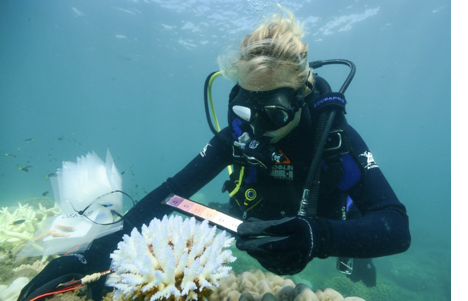
An AIMS Scientist measuring bleached coral. Photo: Eric Matson
When the ocean water gets too warm, the coral become stressed. To cope, they push out their algae helpers. Without the algae, the coral lose their colour and turn white—this is called coral bleaching. Bleached coral are not dead straight away, but they are weaker and have less energy.
If the water cools down soon enough, the algae can come back and the coral can recover. But if the heat lasts too long, the coral may die. This is a big problem because many sea animals depend on coral reefs for food and shelter, and people depend on reefs too. Climate change is making the oceans warmer, which is why coral bleaching is happening more often.
You can find out more about coral bleaching on the Australian Institute of Marine Science website.
Dr Chloe Lucas explains how climate change leads to more frequent and intense bushfires.